
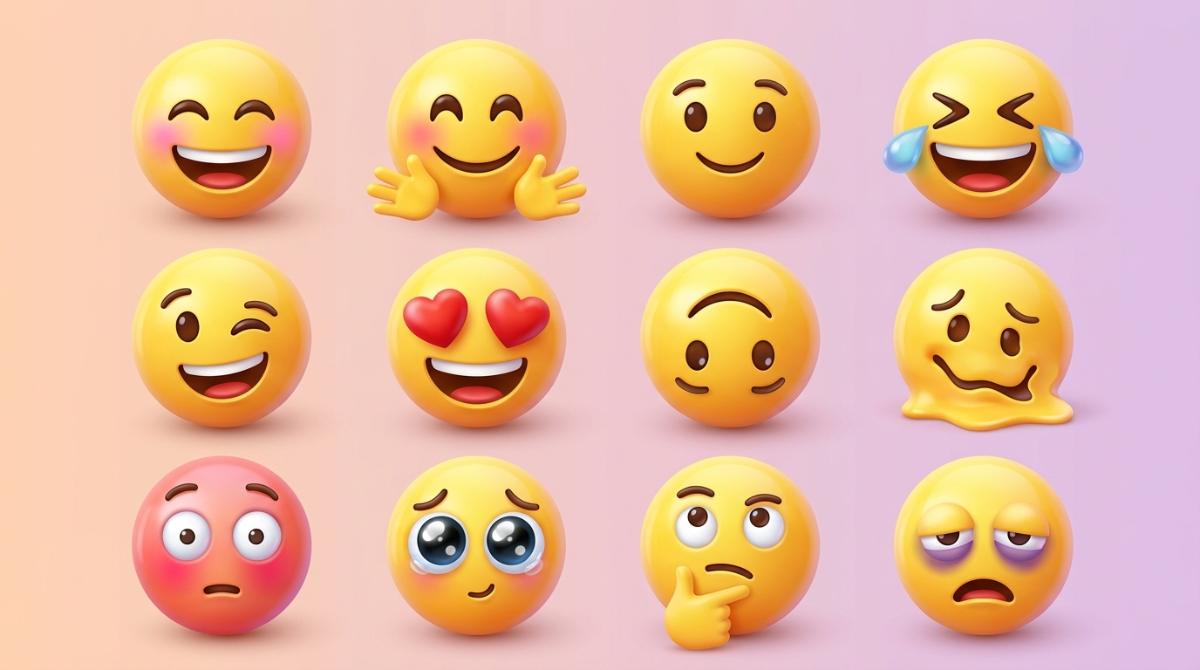

You sent a quick “see you tomorrow 😊” and got back “🤗🤗🤗”. Now you’re wondering: friendly, excited, or flirting? The face emoji meaning almost never lives in the emoji alone. It lives in who sent it, what came before it, and which other emojis travel with it.
This face emoji meaning guide decodes the most-used smileys, with extra depth on the two people search for most: 😊 (the “blushing face”) and 🤗 (the hugging face). You’ll also get a simple 3-step method to read any emoji, real reply examples, and what changed with the 2026 emoji update.
Quick answer: The face emoji meaning in short: a small yellow smiley that adds tone — happiness, sarcasm, shyness, love — to a text. The most common one, 😊 (Smiling Face with Smiling Eyes), means genuine warmth and gratitude. It turns flirty only when the conversation is already playful or personal.
Face Emoji Meaning: What Counts as a “Face Emoji”?
A face emoji is any emoji in the official Unicode Smileys & Emotion group: yellow faces that copy a human expression. Their job is to replace the tone of voice that plain text loses, and that tone is the real face emoji meaning.
When people search “face emoji meaning” on its own, they usually mean 😊. That’s the rosy-cheeked smile many keyboards suggest first, and the one people call the “blushing face” or “smiley face”. Other faces carry their own meanings, covered in the chart below.
Every face emoji has two layers:
- Official meaning — what the Unicode name and design describe (a smile, a frown, a hug).
- Social meaning — what internet culture turned it into (💀 = “I’m dying of laughter”, 🙃 = quiet sarcasm).
Most misunderstandings happen when the sender uses the social layer and the reader assumes the official one. Knowing both layers is the key to reading any face emoji meaning correctly.
Face Emoji Meanings Chart: 40 Smileys at a Glance
Use this face emoji meaning chart to check any smiley in seconds. The last column rates how often each one gets misread, so you know when to look harder at context.
| Emoji | Official name | What people usually mean | Misread risk |
|---|---|---|---|
| 😊 | Smiling Face with Smiling Eyes | Warmth, thanks, shy happiness | Medium |
| ☺️ | Smiling Face | Calm, sweet contentment | Low |
| 🙂 | Slightly Smiling Face | Polite OK — or passive-aggressive | High |
| 😀 | Grinning Face | Plain happiness, good news | Low |
| 😁 | Beaming Face with Smiling Eyes | Proud, excited grin | Low |
| 😄 | Grinning Face with Smiling Eyes | Laughing happily | Low |
| 😅 | Grinning Face with Sweat | Nervous laugh, “oops”, relief | Medium |
| 😂 | Face with Tears of Joy | Very funny (older-skewing) | Low |
| 🤣 | Rolling on the Floor Laughing | Uncontrollable laughter | Low |
| 😭 | Loudly Crying Face | Overwhelmed — often by laughter or cuteness | High |
| 💀 | Skull | “I’m dead” from laughing | High |
| 😉 | Winking Face | Joke, hint, or flirting | Medium |
| 😏 | Smirking Face | Smug, teasing, suggestive | Medium |
| 😍 | Smiling Face with Heart-Eyes | Love it / crush energy | Low |
| 🥰 | Smiling Face with Hearts | Deep affection, feeling loved | Low |
| 😘 | Face Blowing a Kiss | Kiss, love, warm goodbye | Medium |
| 😚 | Kissing Face with Closed Eyes | Shy, intimate kiss | Medium |
| 🤗 | Smiling Face with Open Hands (Hugging Face) | Hug, thanks, excitement, “jazz hands” | Medium |
| 🤭 | Face with Hand Over Mouth | Giggle, “oops”, shy surprise | Medium |
| 🫣 | Face with Peeking Eye | Can’t look, awkward curiosity | Low |
| 🥺 | Pleading Face | Puppy eyes, begging, touched | Medium |
| 🥹 | Face Holding Back Tears | Proud, moved, emotional | Low |
| 😳 | Flushed Face | Embarrassed, caught off guard, flustered | Medium |
| 🙃 | Upside-Down Face | Sarcasm, “well, this is fine” | High |
| 🫠 | Melting Face | Embarrassment, dread, too hot | Medium |
| 😐 | Neutral Face | Unimpressed, deadpan | Medium |
| 😑 | Expressionless Face | Done with this, annoyed | Low |
| 😒 | Unamused Face | Disapproval, side-eye | Low |
| 🙄 | Face with Rolling Eyes | Annoyed, “whatever” | Low |
| 🤨 | Face with Raised Eyebrow | Doubt, suspicion | Low |
| 🤔 | Thinking Face | Considering, skeptical | Low |
| 😶 | Face Without Mouth | Speechless, silence, awkward | Medium |
| 🫥 | Dotted Line Face | Feeling invisible, wanting to disappear | Medium |
| 😬 | Grimacing Face | Awkward, “yikes” | Medium |
| 😔 | Pensive Face | Sad, regretful, quietly down | Low |
| 😢 | Crying Face | Genuine sadness, hurt | Low |
| 😩 | Weary Face | Exhausted, frustrated — or “so good” | Medium |
| 😤 | Face with Steam From Nose | Triumph or frustration | High |
| | Face with Bags Under Eyes | Tired, burnt out (Emoji 16.0) | Low |
| | Distorted Face | Overwhelmed, glitchy, “brain broke” (Emoji 17.0) | Medium |
How to use the risk column: a “High” emoji means its social face emoji meaning often differs from the design. Before reacting to 🙂, 🙃, 😭 or 💀, re-read the message around it.
What Does Blushing 😊 Mean?
The blushing 😊 emoji means genuine happiness, warmth and gratitude, often with a touch of shyness. People send it after a compliment, to say thank you, or to make a short reply feel kind instead of cold.
Its official name is Smiling Face with Smiling Eyes. The “blush” comes from the rosy cheeks most platforms draw, and “blush” is even one of its official search keywords. Emojipedia notes it’s the emoji version of the old ^^ emoticon — a happy face with closed, curved eyes.
😊 Emoji facts at a glance
| Detail | Value |
|---|---|
| Official name | Smiling Face with Smiling Eyes |
| Codepoint | U+1F60A |
| Approved | Unicode 6.0 (2010); added to Emoji 1.0 (2015) |
| Category | Smileys & Emotion → face-smiling |
| Search keywords | blush, eye, face, smile |
| Also known as | Blushing face, happy face, smiley face |
| Snapchat meaning | Next to a friend’s name: you chat a lot, but they aren’t your #1 best friend |
😊 vs similar faces: which smile means what?
These five faces look alike in a tiny chat window, but they send very different signals:
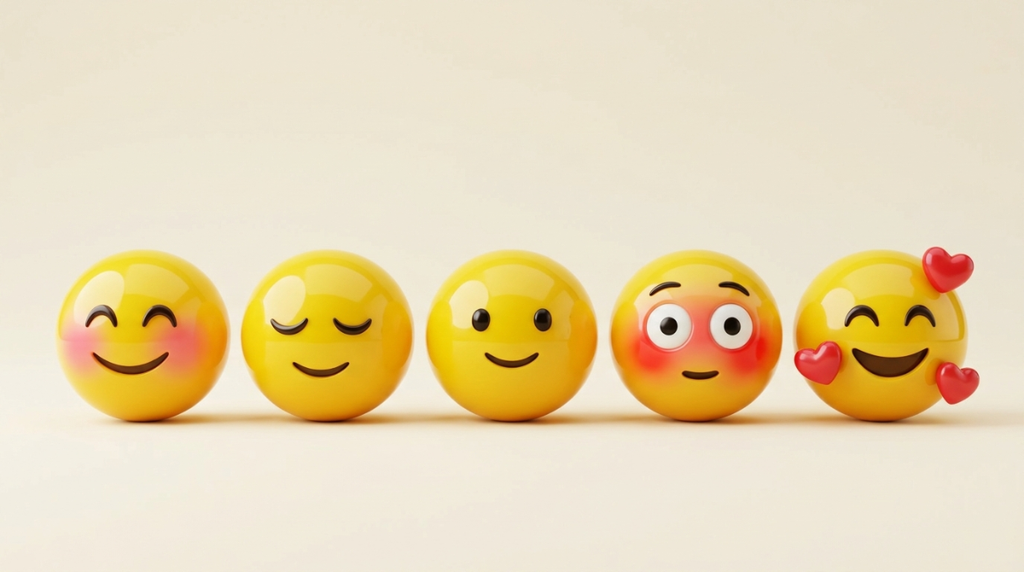
| Emoji | Feels like | Warmth | Flirt level | Best used for |
|---|---|---|---|---|
| 😊 | Sincere, sweet, a bit shy | High | Low–medium | Thanks, compliments, kind replies |
| ☺️ | Calm, gentle, content | High | Low–medium | Soft, peaceful replies |
| 🙂 | Polite, flat, sometimes tense | Low | None | Formal chats (with care) |
| 😳 | Flustered, caught off guard | Medium | Medium | Reacting to a bold compliment |
| 🥰 | Adoring, feeling loved | Very high | High | Close friends, partners, crushes |
The big trap is 🙂. Its smile is smaller and its eyes are open, so many younger users read it as fake or passive-aggressive. If you mean warmth, 😊 is the safer choice.
Real examples of 😊 in a chat
- “Thank you so much for the help today 😊” — sincere gratitude.
- “You looked great in that photo.” → “Aww thanks 😊” — flattered, a little shy.
- “Can you send the file when you’re free? 😊” — softening a request so it doesn’t sound like an order.
Is 😊 Flirty From a Woman?
Sometimes, but not by default. From a woman, 😊 is usually friendly warmth. It becomes flirty when the conversation is already personal or playful, when it follows a compliment about her, or when she uses it with you more than with others.
Think of 😊 as a volume knob, not a switch. It amplifies whatever mood the conversation already has. In a work chat it sounds polite; after “I had a really good time tonight” it sounds sweet and interested.
5 signs her 😊 is flirty
- It follows something personal. She sends 😊 after you compliment her looks, laugh or personality, not after a logistics message.
- It comes with other warm emojis. 😊 paired with 😉, 😳, 🥰 or 🙈 points to playful interest.
- She starts conversations. A 😊 in a message she opened carries more weight than one in a reply.
- It’s different from her usual style. If she rarely uses emojis and suddenly sends 😊 to you, that’s meaningful.
- The texts get longer. Interest shows in effort: questions back, follow-ups, quick replies.
Context decides the meaning
| Her message | Most likely meaning |
|---|---|
| “Thanks for the notes 😊” | Polite gratitude |
| “Haha you’re sweet 😊” | Flattered; could be friendly or a soft flirt |
| “I was hoping you’d text 😊” | Clear interest |
| “Night 😊” (after a long chat) | Warm and comfortable with you |
| “Sure 😊” to everyone in a group | Her default friendly tone — not about you |
Honest rule: no single face emoji meaning is proof of a crush. If you’re unsure, respond with matching warmth and let her words, not the emoji, lead.
What Does 🤗🤗🤗 Mean From a Girl?
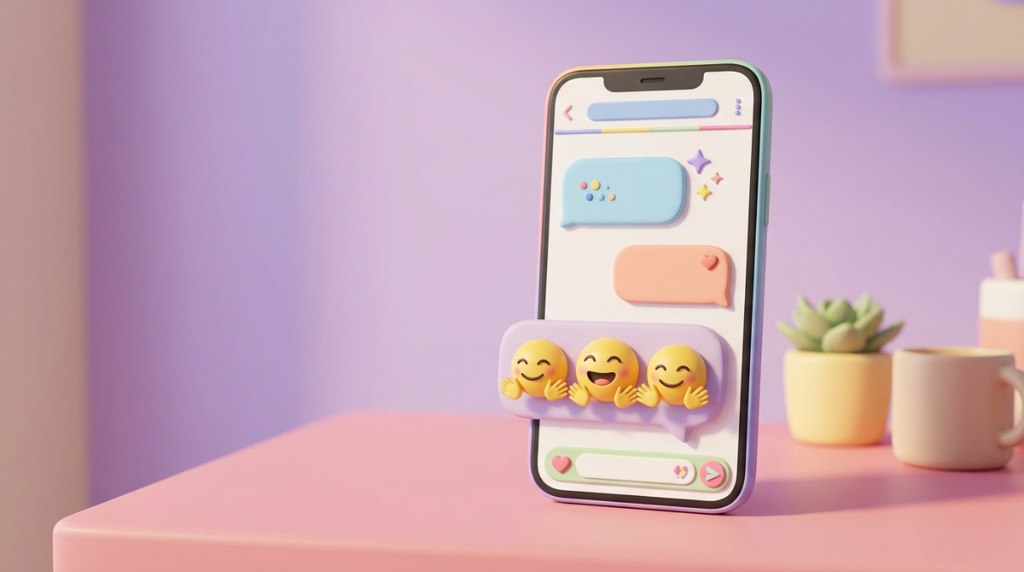
From a girl, 🤗🤗🤗 usually means a big, excited virtual hug: “thank you so much”, “I’m so happy for you” or “aww, come here”. Repeating it three times turns up the intensity. It’s affectionate, but on its own it’s more often friendly than romantic.
First, what 🤗 actually shows
The emoji’s current official name is Smiling Face with Open Hands, though most people still call it the hugging face. Dictionary.com notes it was approved in 2015 under Unicode 8.0, alongside 🙃 and 🙄.
Because the hands look like they’re waving rather than hugging, many people read it as jazz hands — pure excitement. Elon Musk famously tweeted in 2018 that he’d just discovered the “jazz hands emoji”. Some users even find it slightly awkward or creepy. So 🤗 can mean a hug, or simply “yay!”.
Why three? What repetition adds
| Version | What it signals |
|---|---|
| 🤗 | A warm, friendly hug or “thanks” |
| 🤗🤗 | Extra warmth, real enthusiasm |
| 🤗🤗🤗 | Peak excitement or gratitude — “I’m squeezing you right now” |
Repeated emojis work like exclamation marks: they turn up the face emoji meaning rather than change it. Three of them say the emotion is big, not that it’s a different emotion.
🤗🤗🤗 in context
| Situation | Most likely meaning |
|---|---|
| You shared good news | “So happy for you!” |
| You helped her with something | Big, sincere thank-you |
| She hasn’t seen you in a while | “Missed you!” |
| You told her you’re having a hard day | Comfort and support |
| Late-night, one-on-one, after a flirty exchange | Affection that may be romantic |
🤗 vs 🫂: don’t mix them up
🤗 is a smiling face with open hands — cheerful, light and often excited. 🫂 (People Hugging) shows two people in a real embrace. It’s quieter and deeper, mostly used for comfort, grief or close love. If she sends 🫂, she’s offering emotional support, not celebrating.
How to reply to 🤗🤗🤗
- If it’s a thank-you: “Anytime! Happy I could help 😊”
- If it’s excitement: “Haha I knew you’d love it 🤗”
- If it’s comfort: “Thank you, that honestly helps ❤️”
- If you sense flirting: “Careful, I’m going to expect a real one next time 😉”
Face Emoji Meaning From a Boy or Guy
From a boy or a guy, a face emoji like 😊 usually means he’s comfortable, happy with the conversation, or a little shy. Because many men use fewer and “safer” emojis, a soft one like 😊, 🥰 or 😳 from him often carries more weight than the same emoji from a frequent emoji user.
There’s no separate face emoji meaning for boys and girls — the emoji means the same thing. What changes is the baseline: how he normally texts. Adobe’s 2019 US emoji survey found women’s top three were 😂, ❤️ and 😘, while men’s were 😂, 😁 and 😢. Men leaned toward laughter and plain grins rather than affection faces.
Common face emojis from a guy, decoded
| Emoji | When he sends it, it usually means |
|---|---|
| 😊 | Comfortable, appreciative, a bit shy — especially after a compliment |
| 😅 | Nervous, trying not to look too eager, or laughing off a mistake |
| 😉 | Teasing or testing the waters |
| 😏 | Confident flirting or a cheeky joke |
| 😳 | You said something that surprised or flustered him |
| 😂 / 💀 | He finds you genuinely funny |
| 🥰 / 😍 | Strong affection — a rare, high-signal emoji for most guys |
| 🙂 | Neutral or polite; occasionally a sign he’s annoyed |
Signs his face emojis mean he’s interested
- He uses emojis with you that he doesn’t use in group chats.
- His emoji count went up as you talked more.
- He sends 😊 or 😅 right after complimenting you — a classic “hope that wasn’t too much” move.
- He mirrors your emojis back to you.
A boy (teen) and a guy (adult) differ mostly in style, not in face emoji meaning. Younger users lean on 😭 and 💀 as humor; older users use 😂 and 😊 more literally.
Face Emoji Meaning in WhatsApp
On WhatsApp, face emojis mostly add warmth and tone to short messages. A 😊 makes “ok” sound friendly instead of cold, and a face emoji used as a reaction (long-press a message) is a quick way to acknowledge something without typing a reply.
The face emoji meaning doesn’t change from app to app, but the culture around each app does. WhatsApp is closer to private conversation with family, friends and coworkers, so faces are read more literally than on TikTok or X.
Three WhatsApp-specific things to know
- Reactions are lighter than replies. Reacting 😊 to a long, emotional message can feel dismissive. A written reply shows more care.
- WhatsApp draws its own emoji designs. On Android, WhatsApp uses its own set, so a face can look slightly different from the sender’s keyboard. That rarely changes the meaning, but small differences in eyes and blush can.
- Groups flatten meaning. A 😊 in a family group is general warmth, not a personal signal to you.
The same face across platforms
| Platform | How face emojis are usually read | Example |
|---|---|---|
| Literal and warm; family, friends, work | “Reached home 😊” | |
| Playful, aesthetic, ironic captions | “Main character energy 😌” | |
| TikTok | Exaggerated, meme-driven | “Not me crying at this 😭😭” |
| Snapchat | Playful; 😊 next to a name is a friend-status badge | 😊 = you chat often, not #1 best friend |
| X (Twitter) | Sarcastic, reacting to news | “Great news for everyone 🙃” |
| Slack / Teams | Polite, minimal | “Done, thanks 🙂” |
| Dating apps | Every emoji is read as a tone signal | “Would love to get coffee 😊” |
The 3-Step Method to Decode Any Face Emoji
To read any face emoji meaning correctly, check three things in order: the sender’s baseline, the context of the message, and the cluster of emojis around it. This takes ten seconds and prevents most misreadings.
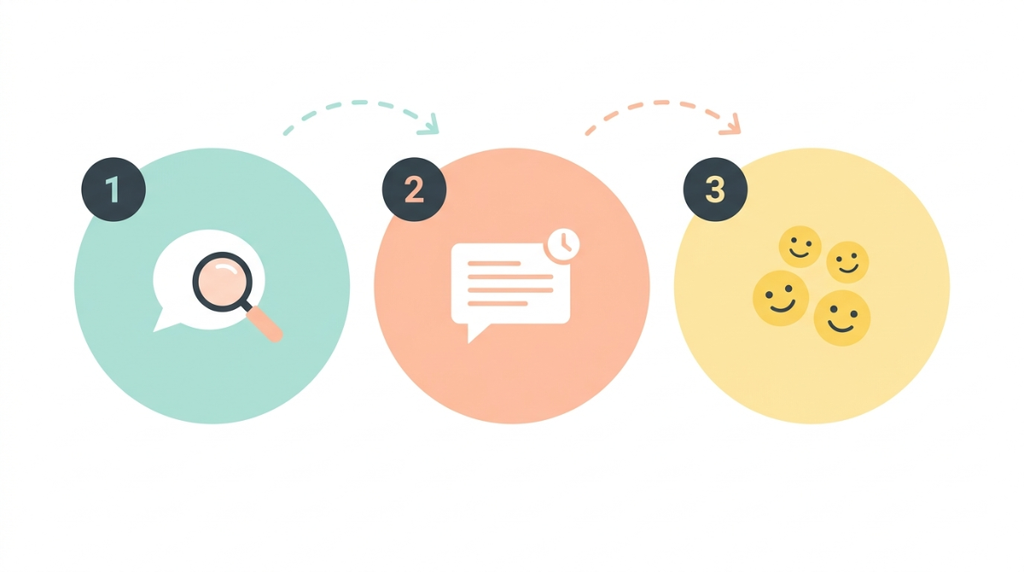
- Baseline — how does this person normally text? Someone who puts 😊 on every message is just being friendly. Someone who almost never uses emojis is saying something by sending one.
- Context — what came right before it? 😊 after “the meeting moved to 3pm” is politeness. 😊 after “I can’t stop thinking about last night” is personal.
- Cluster — which emojis travel with it? 😊👍 is friendly. 😊😳 is shy. 😊😉 is playful. 🙂👍 with a one-word reply can mean irritation.
If all three point the same way, trust that face emoji meaning. If they conflict, go with the words, not the emoji.
Generational and Cultural Differences
The same face emoji meaning can flip between a 17-year-old and a 47-year-old. Age and culture are the two biggest reasons emojis get misread.
Gen Z vs Millennials vs older users
| Emoji | Gen Z often means | Older users often mean |
|---|---|---|
| 🙂 | Fake smile, passive-aggressive | A normal, friendly smile |
| 😂 | Outdated or “cringe” laughter | Something is very funny |
| 😭 | Laughing hard, or overwhelmed by cuteness | Actually crying |
| 💀 | “I’m dead” from laughing | Death, danger, something dark |
| 😊 | Sweet, slightly shy | Polite and kind |
Adobe’s 2021 Global Emoji Trend Report found that 63% of Gen Z users use emojis differently from their intended meaning. That’s why a parent’s 🙂 can read as cold to a teenager. For more on how younger users talk online, browse our Gen Z slang meanings.
Culture changes meaning too
In China, the slightly smiling face (微笑 on WeChat) is widely read as dismissive or sarcastic, not friendly. In many South Asian chats, 😊 and 🙏 (see our folded hands emoji meaning guide) are used as polite respect markers with elders and in business. When a face emoji meaning could vary across cultures, choose clearer faces like 😊 or 😀 over subtle ones like 🙂.
Newest Face Emojis (2024–2026)
The newest face emoji on most phones in 2026, and the newest face emoji meaning to learn, is Distorted Face, part of Emoji 17.0. It’s used for feeling overwhelmed, confused or “glitching” — the face your brain makes after a long day.
| When | Update | New face and its meaning |
|---|---|---|
| 2026 (draft) | Emoji 18.0 proposals | A “Cracking Face” was proposed after “Face With Squinting Eyes” was dropped from the draft list |
| March 2026 | Apple iOS 26.4 adds 163 Emoji 17.0 emojis; Android support rolls out the same month | becomes usable on most phones |
| Sept 9, 2025 | Unicode 17.0 / Emoji 17.0 released | Distorted Face: overwhelmed, “my brain broke”, chaotic humor |
| Sept 2024 | Emoji 16.0 released | Face with Bags Under Eyes: exhaustion, burnout, “I haven’t slept” |
If someone sends a face you see as an empty box, their phone has a newer emoji set than yours. Updating your OS usually fixes it.
How to Reply to Face Emojis: Copy-Ready Examples
Once you know the face emoji meaning, the safest reply mirrors the sender’s energy: match warmth with warmth, and answer the words, not just the emoji. Here’s what to send back depending on who it’s from.
| They sent | To a friend | To a crush | To a coworker |
|---|---|---|---|
| 😊 | “Glad you liked it! 😊” | “That smile looks good on you 😉” | “Happy to help!” |
| 🤗🤗🤗 | “Group hug 🤗” | “I’ll take that hug in person next time” | “Anytime — glad it worked out!” |
| 🙂 | “All good? You seem quiet” | “Hmm, that’s a mysterious smile” | Reply normally; it’s usually just polite |
| 😳 | “Hahaha why are you red 😂” | “Did I just make you blush? 😏” | Clarify if your message was unclear |
| 😭 | “I KNOW 😭” (if it’s laughter) | “Okay that was cute 😭” | Check context — ask if they’re OK |
| 🙃 | “What happened now 😭” | “Uh oh, who do I need to fight?” | Address the issue directly |
Face Emojis at Work: Safe vs Risky
At work, stick to clear, low-risk faces whose face emoji meaning is hard to misread. A 😊 or 🙂 can soften a request in Slack or Teams, but heavy or slangy faces can look unprofessional or be misread.
- Usually safe: 😊 😀 🙂 😅 🤔
- Use with people you know well: 😂 🤣 😬 🫠
- Avoid in work chats: 😏 😘 😍 💀 🙄 🙃
A rule of thumb: if the emoji would be odd as a real facial expression in a meeting, skip it in the message.
Common Face Emoji Meaning Mistakes
- Using 🙂 to sound friendly. To many readers, especially under 30, it sounds tense. Use 😊 instead.
- Treating one emoji as proof of feelings. A single 😊 or 🤗 shows warmth, not a confession.
- Reading 😭 as real sadness. In casual chats it’s more often laughter or “this is too cute”.
- Confusing 🤗 with 🫂. One is a cheerful hug or jazz hands; the other is a deep, comforting embrace.
- Replying only with a reaction to serious news. A typed reply shows you actually read it.
Frequently Asked Questions
What does the 😊 face emoji mean?
😊 means genuine happiness, warmth and gratitude, sometimes with a hint of shyness. Its official name is Smiling Face with Smiling Eyes. People use it to say thanks, react to compliments, or make short replies sound kind. It only reads as flirty when the conversation is already personal.
Is the blushing emoji flirty?
It can be, but it isn’t automatically. 😊 is flirty when it follows a personal compliment, appears with emojis like 😉 or 😳, or comes from someone who rarely uses emojis. In everyday chats with friends or coworkers, it’s simply friendly.
What does 🤗 mean from a girl?
Usually a warm virtual hug: thanks, excitement, or “so happy for you”. Many people also use it as jazz hands. It’s affectionate but mostly friendly; context such as late-night one-on-one chats decides whether it’s romantic.
What’s the difference between 😊 and 🙂?
😊 has closed, smiling eyes and rosy cheeks, so it reads as sincere and warm. 🙂 has open eyes and a small smile, so many younger users read it as polite at best and passive-aggressive at worst.
Do face emojis look the same on WhatsApp, iPhone and Android?
No. Each platform draws its own design, and WhatsApp on Android uses its own set. The face emoji meaning stays the same, but details like blush, eye shape and hand position can shift how warm a face feels.
What is the newest face emoji?
Distorted Face, released in Emoji 17.0 in September 2025 and added to iPhones with iOS 26.4 in March 2026. It’s used for feeling overwhelmed or mentally “glitched”.
Why do people use 😭 and 💀 when something is funny?
Both are exaggerations. 😭 means “I’m laughing so hard I’m crying” and 💀 means “I’m dead from laughing”. Younger users largely replaced 😂 with these.
How should I reply to a face emoji?
Mirror the sender’s energy and respond to their words. Answer 😊 with warmth, 🤗 with appreciation, and 🙂 with a gentle check-in if the conversation feels off.
Conclusion
Face emoji meaning comes down to three things: who sent it, what came before it, and what other emojis came with it. 😊 is warmth that can turn flirty, 🤗🤗🤗 is a big excited hug, and 🙂 is the face most likely to be misunderstood. Check the baseline, context and cluster, and you’ll read almost any text correctly.
Next: Decoding a specific emoji? Read our shrug emoji meaning 🤷 guide, see what the white heart emoji 🤍 means, or browse the full Emoji & Symbols library. Bookmark this face emoji meaning guide, because we update it with every new Unicode emoji release.
