


FOMO meaning: FOMO stands for “Fear Of Missing Out” — the uneasy feeling that other people are having more fun, success, or rewarding experiences than you, usually triggered by seeing it happen on social media. It’s not an official mental illness, but it’s a real, measurable form of social anxiety that affects how people spend money, time, and attention.
If you’ve ever refreshed Instagram at 1 a.m. to check what a party looked like, or said yes to plans you didn’t actually want to attend just so you wouldn’t be “left out” — that’s FOMO in action. This guide breaks down the full FOMO meaning: where the term came from, why your brain produces this feeling, and seven ways that actually work to quiet it.
FOMO Meaning: Quick Definition
The FOMO meaning is simple: it’s an acronym for “Fear Of Missing Out.” The Oxford English Dictionary defines it as “anxiety that an exciting or interesting event may currently be happening elsewhere, often aroused by posts seen on social media.”
In plain terms: it’s the discomfort of thinking everyone else got the memo, the invite, or the opportunity — and you didn’t.
Example sentences:
- “I had major FOMO watching my friends’ vacation stories while I was stuck at work.”
- “She bought the concert ticket purely out of FOMO, not because she wanted to go.”
- “FOMO marketing uses phrases like ‘only 2 left in stock’ to push you to buy fast.”
Where Did the Term FOMO Come From?
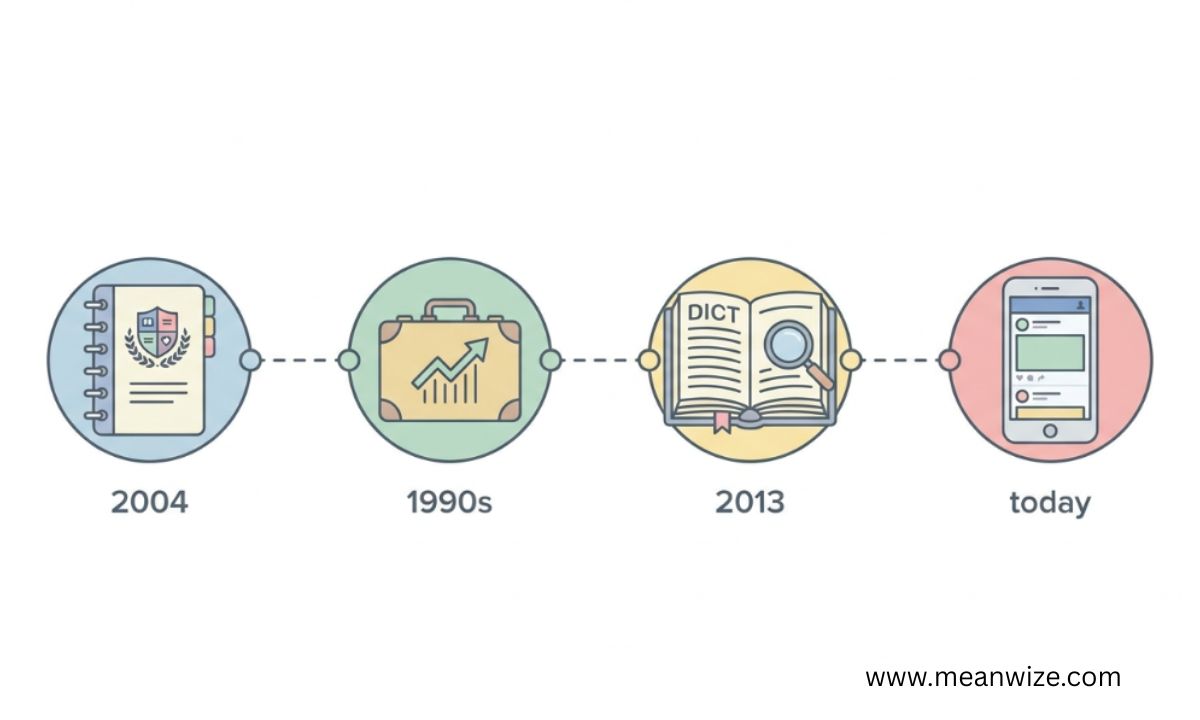
The word “FOMO” wasn’t invented by a psychologist — it came out of business school. Patrick J. McGinnis, a student at Harvard Business School, coined it in a 2004 opinion piece for The Harbus titled “Social Theory at HBS: McGinnis’ Two FOs”, where he also introduced its lesser-known cousin, FOBO (“Fear Of Better Options”).
Marketing strategist Dan Herman had used a similar phrase in industry presentations in the late 1990s, but McGinnis’s version is the one that stuck. The term entered mainstream use as smartphones and social feeds exploded, and the Oxford English Dictionary officially added “FOMO” in 2013, cementing it as a recognized part of the English language rather than internet slang. Other internet-born terms have followed the same path — IYKYK is a good example of shorthand that grew from niche jargon into a phrase people look up by name.
FOMO vs. JOMO vs. FOBO vs. ROMO
Once FOMO became a household term, a handful of related acronyms followed. Here’s how they differ at a glance:
| Term | Full Form | Meaning |
|---|---|---|
| FOMO | Fear Of Missing Out | Anxiety that others are having better experiences than you |
| JOMO | Joy Of Missing Out | Contentment in choosing to disconnect and stay present |
| FOBO | Fear Of Better Options | Anxiety over committing in case something better shows up |
| ROMO | Reality Of Missing Out | Accepting that missing out is a normal, unavoidable part of life |
JOMO is the direct antidote to FOMO — it’s the deliberate choice to skip the event, mute the group chat, and feel good about it instead of guilty.
What Causes FOMO?
The FOMO meaning goes deeper than internet slang — it isn’t random. It comes from a mix of evolutionary wiring and modern technology working against each other.
1. Loss aversion and social survival instinct. Humans evolved in small tribes where being excluded from the group had real survival consequences. That old wiring still fires today, just triggered by a group chat instead of a hunting party.
2. Social media’s highlight-reel effect. Feeds show curated, edited versions of other people’s lives — the best photo from the trip, not the 6-hour flight delay. Comparing your ordinary Tuesday to someone else’s highlight reel is a mismatch that breeds anxiety.
3. Comparison culture. Constant exposure to peers’ purchases, promotions, and plans keeps a low hum of “am I keeping up?” running in the background.
4. Underlying anxiety or low self-esteem. Research consistently links higher FOMO scores to existing anxiety, depression, and lower self-esteem — the feeling amplifies whatever insecurity is already there. If distorted self-perception feels familiar too, our guide to Delulu meaning covers a related pattern — when hope tips into denial.
Signs You’re Dealing With FOMO
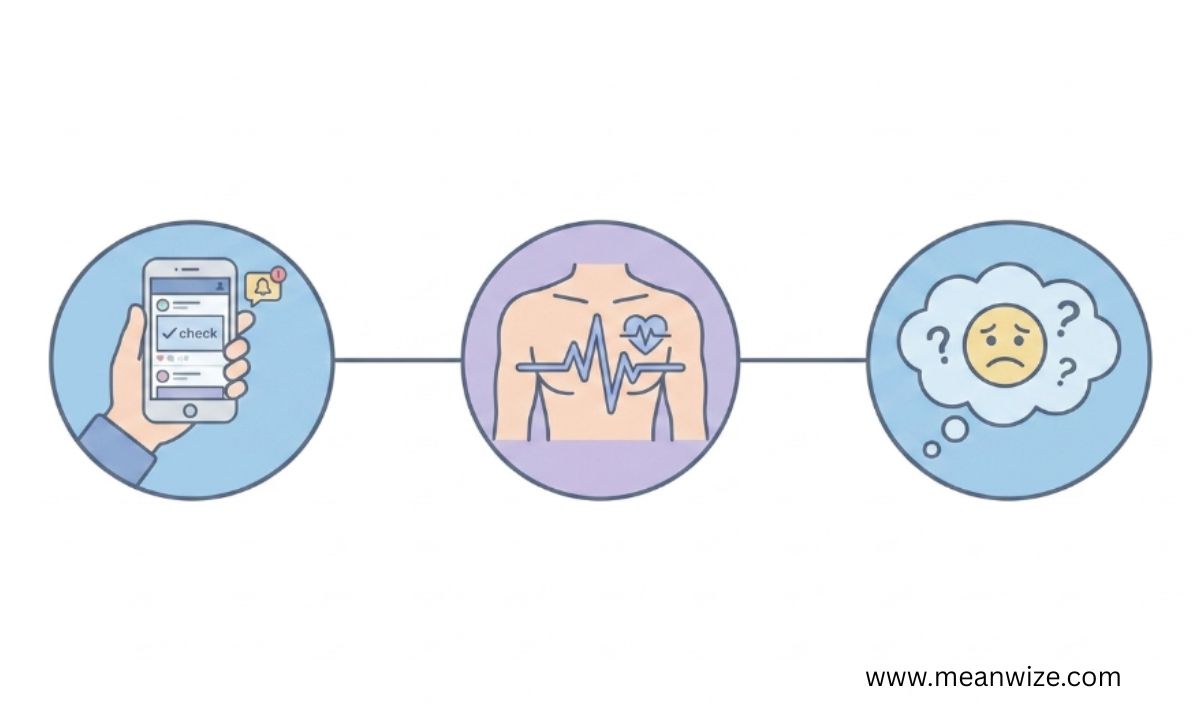
Recognizing the FOMO meaning in your own behavior starts with three categories of signs — behavioral, physical, and emotional. You likely have it if several of these feel familiar:
Behavioral signs
- Checking your phone the moment you wake up, out of habit rather than need
- Saying yes to plans you don’t actually want, just to avoid being left out
- Scrolling social media compulsively, especially late at night
Physical signs
- Stomach tightness or a racing heart when you see others’ plans without you
- Headaches or restlessness tied to phone use
Emotional signs
- Intrusive thoughts about what you might be missing
- Negative self-talk after comparing your life to someone else’s post
- A vague sense of dissatisfaction even when your own day was fine
Real Examples of FOMO (By Type)
These real-life examples show the FOMO meaning in action — it doesn’t only show up around parties. It has distinct flavors depending on context:
| Type | What It Looks Like |
|---|---|
| Social FOMO | Feeling anxious after seeing friends hang out without you in a group photo |
| Career FOMO | Applying for a job you don’t want because a peer got promoted first |
| Financial / Crypto FOMO | Buying a stock or coin at its peak because “everyone else is making money” |
| Relationship FOMO | Staying in or re-entering a relationship out of fear of being single while others are coupled up |
| Marketing-triggered FOMO | Buying something impulsively because a countdown timer says “sale ends in 2 hours” |
FOMO Statistics You Should Know
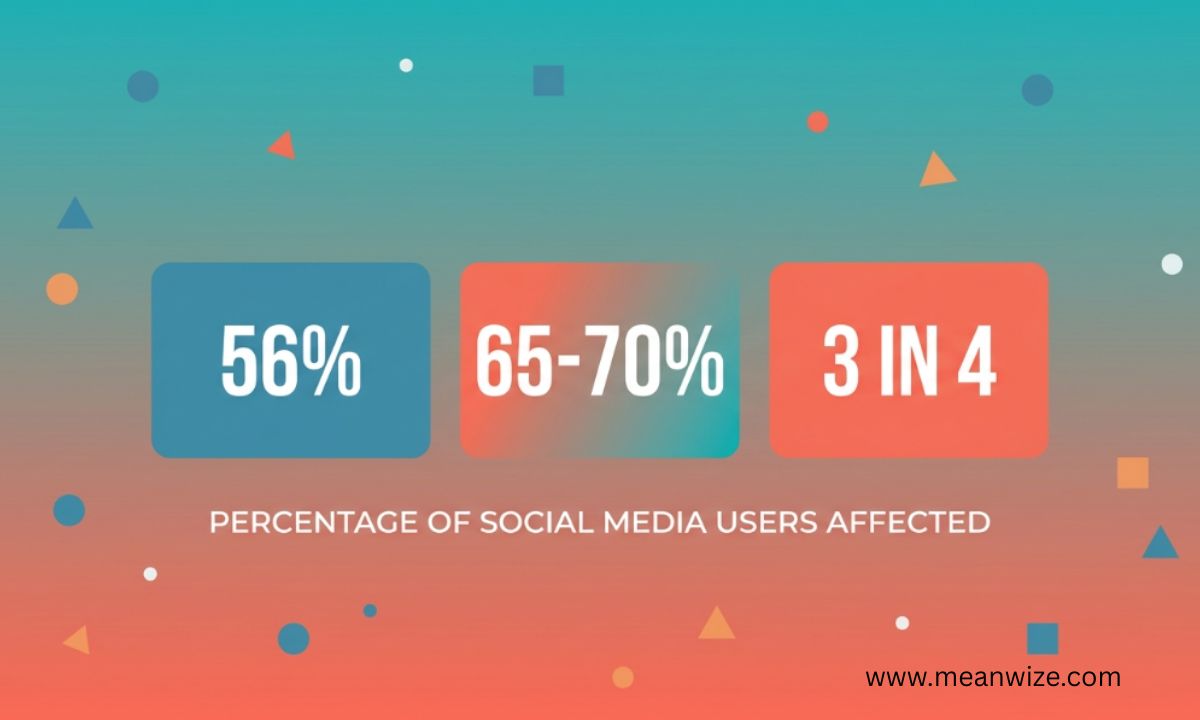
- In one widely cited Statista survey, 56% of U.S. social media users said they experience FOMO.
- 65–70% of millennials say they feel FOMO specifically around events and experiences they see online, according to survey data compiled across multiple studies.
- 3 in 4 young adults report struggling with FOMO at some point, per WebMD’s review of survey data.
- In peer-reviewed research, FOMO has been shown to mediate the relationship between anxiety, stress, and compulsive social media or gaming use — meaning the fear itself helps drive the checking behavior, not just the other way around.
- FOMO tends to be highest among younger age groups and gradually declines with age.
Is FOMO a Mental Health Disorder?
No. FOMO is not an officially recognized clinical diagnosis in the DSM-5. It’s best understood as a social-anxiety-adjacent behavior pattern rather than a standalone disorder. That said, chronic, intense FOMO can be a symptom of — or contributor to — anxiety disorders, depression, or compulsive social media use, and it’s worth mentioning to a therapist if it’s disrupting sleep, spending, or relationships.
How to Overcome FOMO — 7 Strategies That Work
1. Turn off non-essential notifications. Most FOMO is triggered the moment your phone buzzes. Muting app badges and push alerts removes the trigger before the feeling even starts.
2. Practice JOMO on purpose. Once a week, deliberately skip something and notice how it feels to choose rest instead of guilt. This retrains the automatic “I should be there” response.
3. Do a values audit. Write down what actually matters to you (health, close friendships, savings goals) and check upcoming invitations or purchases against that list before saying yes out of anxiety.
4. Remember feeds are highlight reels, not real life. Actively reminding yourself that a post is curated — not the full picture — weakens the comparison trap.
5. Keep a short gratitude log. Three lines a day about what went well interrupts the comparison spiral that FOMO runs on.
6. Schedule quality time in advance. Booking time with people you care about removes the anxious feeling of “I might be missing the good stuff,” because you already have your own good stuff planned.
7. Talk to a professional if it’s persistent. Cognitive behavioral therapy (CBT) is well-supported for anxiety patterns like FOMO, especially when it’s tied to low self-esteem or compulsive phone use.
How Brands Use FOMO in Marketing
Beyond personal anxiety, the FOMO meaning has been fully weaponized by marketers — it’s a deliberate sales tactic. Common examples include countdown timers on checkout pages, “only 3 left in stock” labels, limited-edition product drops, flash sales with a ticking clock, and “X people are viewing this right now” notices on booking sites. These work because they turn ordinary loss aversion into urgency, pushing a decision that might otherwise wait. Recognizing the tactic is often enough to reduce its pull — if a purchase decision changes the instant a timer appears, that’s FOMO doing the deciding, not you.
Related slang: If you found this helpful, also check our guide on NFS meaning in text.
FAQs
What is the FOMO meaning and full form?
FOMO stands for “Fear Of Missing Out” — anxiety about missing a rewarding experience, event, or opportunity that others are having.
Is FOMO the same as social anxiety?
Not exactly. Social anxiety is a broader fear of judgment in social situations; FOMO is more specific — it’s anxiety about being excluded from something enjoyable, often triggered by seeing it on social media.
What is the opposite of FOMO?
JOMO — “Joy Of Missing Out.” It describes the contentment of intentionally skipping an event or disconnecting from social media without guilt.
Can FOMO ever be a good thing?
In small doses, yes. It can motivate you to try new experiences or stay socially engaged. It becomes a problem when it drives compulsive behavior, overspending, or constant anxiety.
How do you use FOMO in a sentence?
“I had serious FOMO when I saw my coworkers grabbing lunch without me.” It’s used as a noun describing the feeling itself.
Is FOMO a mental illness?
No, it’s not a clinical diagnosis. It’s a behavioral and emotional pattern that can overlap with anxiety or depression but isn’t classified as a disorder on its own.
How common is FOMO?
Very common — surveys estimate that roughly 3 in 4 young adults and about 4 in 10 people overall experience it regularly, with social media use as the biggest driver.
Conclusion
FOMO meaning, in one line: it’s the fear that everyone else’s life is more exciting than yours, and it’s fueled far more by your phone than by reality. Knowing where the term came from, what triggers it, and which of the seven strategies above actually interrupts it puts you back in control — instead of your feed deciding how your evening feels. Curious about other terms shaping how we talk about social media and self-image? Check out our guides to POV meaning and OG meaning.

2 thoughts on “FOMO Meaning: What It Stands For and Why It Feels So Real”