
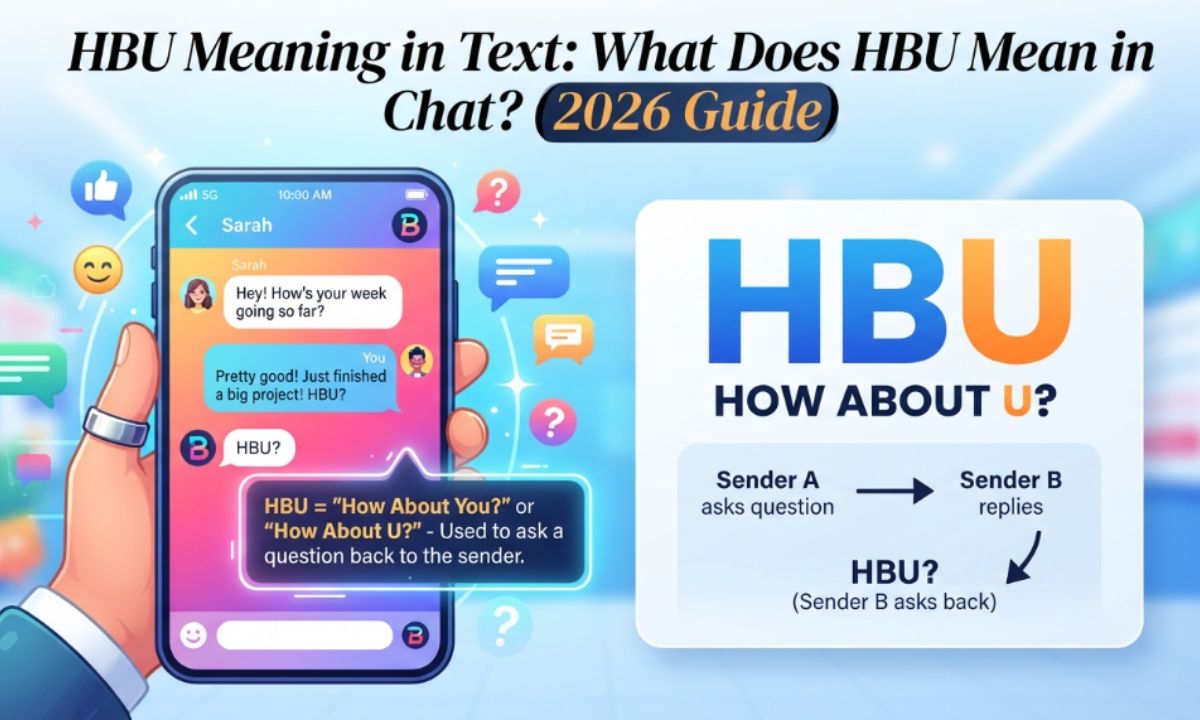

If you’ve ever texted a friend “how’s your day going?” and gotten back a quick reply followed by “hbu,” you’re not alone in wondering what it actually means. It’s one of the most common abbreviations in modern texting, yet a lot of people — especially parents, new social media users, or anyone jumping into group chats for the first time — still pause and think, “wait, what does that mean?”
This guide breaks down everything you need to know about HBU: its meaning, how it’s used across different platforms, whether it can come off as rude or flirty, and exactly how to reply when someone sends it your way.
What Does “HBU” Mean in Text?
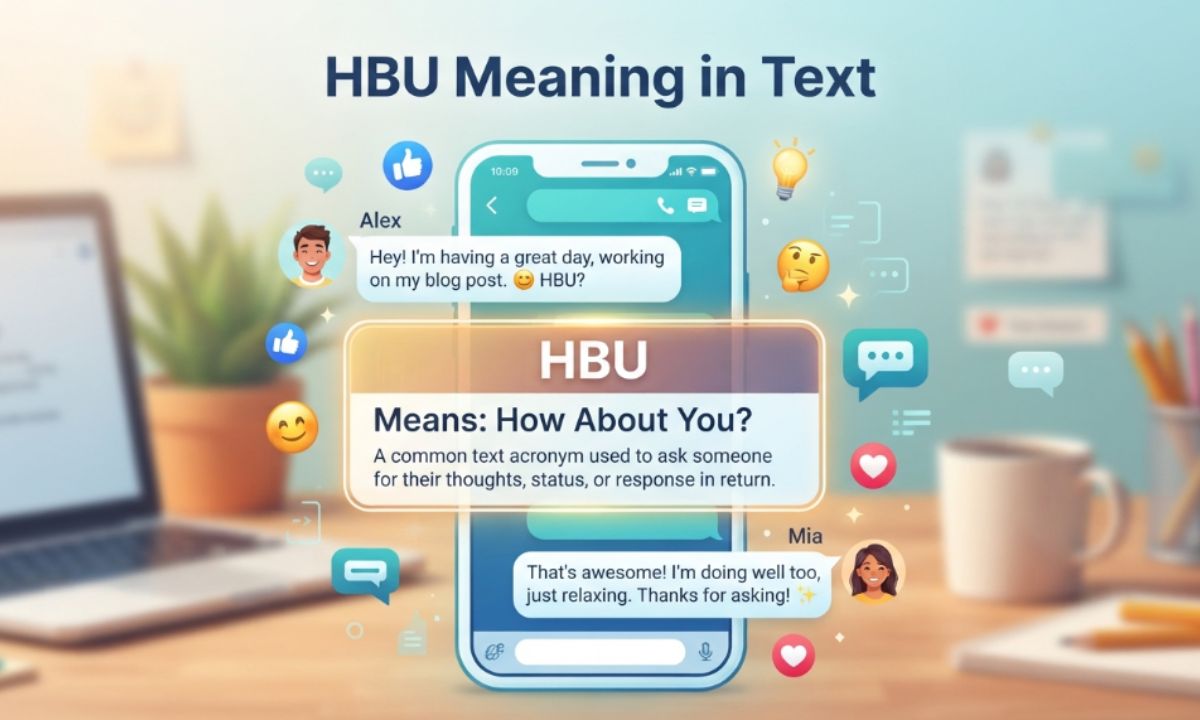
HBU is a texting abbreviation that stands for “How About You?” It’s used to turn a question back around on the person you’re chatting with, usually right after you’ve answered something yourself.
For example:
Friend: How was your weekend? You: Pretty chill, just relaxed at home. HBU?
In that context, HBU simply means “what about your weekend?” It’s a shortcut that saves time and keystrokes while keeping the conversation flowing naturally.
The Most Common Meanings of “HBU”
While “How About You?” is the primary and most widely accepted meaning, HBU can be interpreted slightly differently depending on the sentence it follows. Here’s a quick breakdown.
| Meaning | When It’s Used |
|---|---|
| How About You? | Most common; used after answering a question |
| What About You? | Interchangeable with “how about you” |
| How Have You Been? | Used when reconnecting after a while |
| And You? | Short, casual follow-up in fast-paced chats |
1. “How About You?”
This is the standard, everyday meaning. It’s a polite way of redirecting a question back to the sender without repeating the entire sentence.
2. “What About You?”
Functionally almost identical to “how about you,” this version is used the same way — to ask the other person’s opinion, status, or situation.
3. “How Have You Been?”
When two people haven’t talked in a while, HBU can carry a slightly warmer tone, meaning “how have things been going for you lately?”
4. “And You?”
In fast, casual texting or gaming chats, HBU sometimes works simply as a quick “and you?” — a bare-minimum way to keep the conversation reciprocal.
Good HBU meaning: In every one of these cases, HBU is a friendly, low-effort way to show you’re interested in the other person’s answer too. It’s not rude by default — context and tone are what shape how it lands.
How “HBU” Is Used in Real Conversations
HBU shows up differently depending on where you’re chatting and who you’re talking to.
Friends & Casual Texting
Among friends, HBU is second nature. It’s used constantly in daily check-ins, group chats, and quick catch-ups because it keeps the conversation moving without sounding overly formal.
Instagram & Snapchat
On social apps like Instagram DMs and Snapchat, HBU is practically built into everyday slang. Conversations move fast, streaks matter, and abbreviations like HBU help keep replies quick and snappy.
Dating Apps
On dating apps, HBU often signals genuine interest. When someone answers your question and follows up with “HBU,” it usually means they want the conversation to continue and they’re curious about you too.
Gaming & Online Communities
In gaming chats, Discord servers, and forums, HBU is used the same way it is in texting — a fast way to ask “what about you” without breaking the flow of a match or discussion.
Work or Professional Chat
HBU meaning in business contexts is a little different. While some casual internal Slack messages between coworkers might use it, HBU is generally considered too informal for client-facing emails or formal workplace communication. It’s best reserved for relaxed, peer-to-peer chats rather than official correspondence.
Learn About BFFR Mean.
Is “HBU” Rude, Flirty, or Offensive?
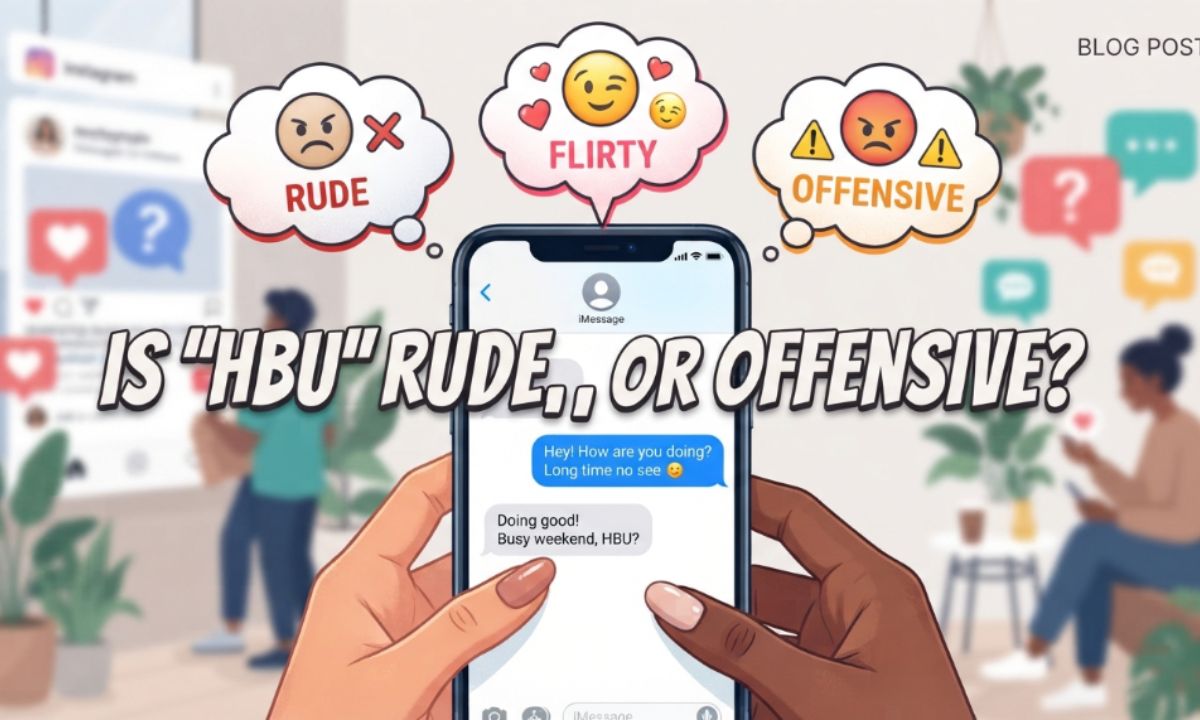
By itself, HBU is neither rude nor offensive. It’s simply a conversational tool. However, tone and context can shift how it’s perceived.
Neutral Tone
Most of the time, HBU is completely neutral — a polite, quick way to keep a conversation balanced.
Friendly Tone
Between friends, HBU often signals warmth and genuine curiosity about how the other person is doing.
Flirty Tone
In a one-on-one conversation with romantic undertones, “hbu 😉” or “hbu though” can carry a flirtatious, teasing vibe, especially when paired with emojis or playful follow-ups.
When It Feels Negative
HBU can feel dismissive or lazy if it’s the only response someone gives, with no other engagement, especially in a conversation where more effort was clearly expected. In those cases, it’s less about the word itself and more about a lack of enthusiasm in the reply.
How to Respond When Someone Says “HBU”
There’s no single “correct” reply — it depends on your relationship with the person and the vibe of the conversation.
Casual Replies
- “I’m good, just chilling.”
- “Same old, same old.”
- “Not much, just got back from class.”
Funny Replies
- “Surviving, mostly on caffeine.”
- “Living my best mediocre life.”
- “Ask me after I’ve had coffee.”
Neutral Replies
- “I’m doing well, thanks for asking.”
- “Pretty good, just busy with work.”
Professional Replies
- “Doing well, thank you! How about yourself?”
- “All good on my end — how are things going for you?”
Common Misunderstandings About “HBU”
Thinking It Means Something Serious
New texters sometimes assume HBU stands for something more complex or technical. In reality, it’s just shorthand for a simple, everyday question.
Confusing It With “HU”
HBU is not the same as “HU,” which is a separate abbreviation often used to mean “hit up” or “hey you,” depending on context. Mixing these two up is a common source of confusion.
Overthinking Tone
Because text lacks vocal tone, some people overanalyze a simple “HBU” as cold or uninterested when it’s usually just efficient texting.
Assuming It Is Lazy Communication
While a bare “hbu” with nothing else can feel low-effort, it’s not inherently lazy — it’s simply compact. Adding even one extra sentence around it usually solves any perceived coldness.
Similar Slang Terms You Should Know
HBU doesn’t exist in isolation — there’s a whole family of related texting shortcuts worth knowing.
| Term | Meaning |
|---|---|
| WBU | What About You (near-identical to HBU) |
| WYD | What You Doing |
| HRU | How Are You |
| HMU | Hit Me Up |
| NM | Not Much |
| SUP | What’s Up |
HBU meaning in text from a guy :
is generally the same as its standard meaning, though in a romantic or dating context, it can be a subtle way of showing continued interest in keeping the chat going.
HBU meaning from a girl :
follows the same logic — it’s typically friendly or flirty rather than formal, and often signals she’s engaged in the conversation and wants to hear more from you.
HBU meaning in text in Urdu:
roughly translates to “aur tum?” or “tumhara kya haal hai?” — essentially the same “and you?” or “how about you?” sentiment, just used in Roman Urdu or mixed-language texting common among South Asian youth online.
When You Should Avoid Using “HBU”
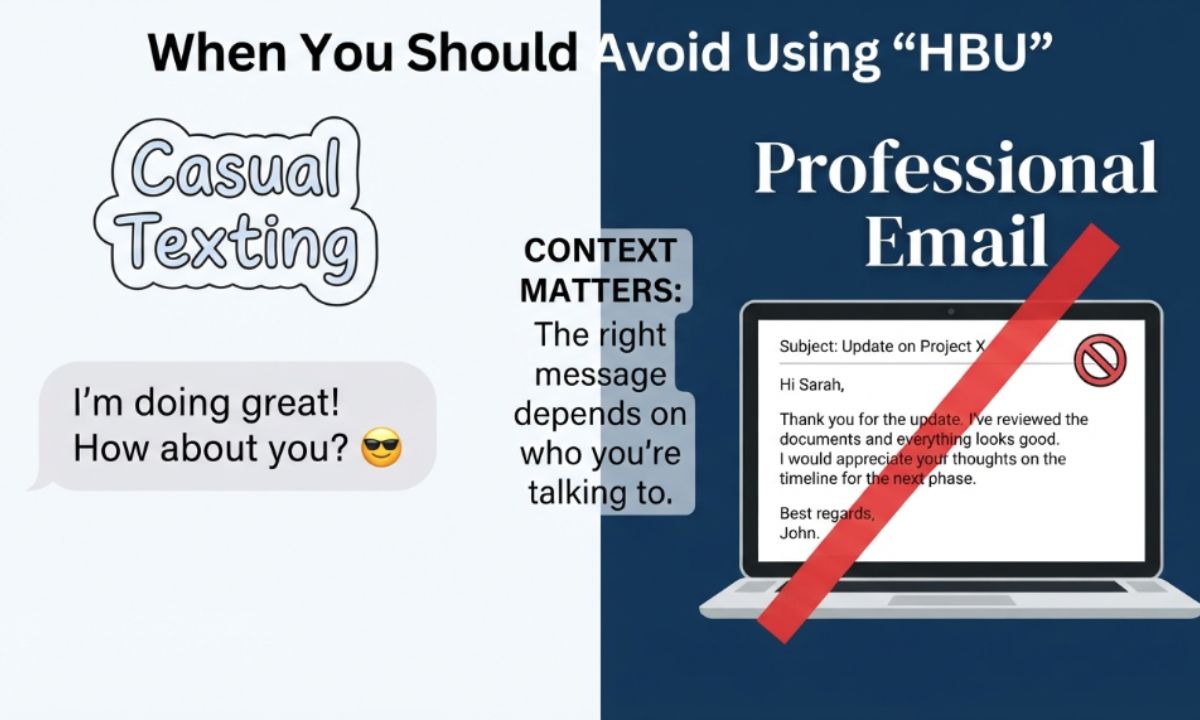
While HBU works great in casual settings, there are a few situations where it’s best to skip it.
Professional Emails
Formal business emails should stick to full phrases like “How are you?” rather than abbreviations, which can come across as unprofessional.
Academic Writing
Essays, reports, and academic submissions should never include texting slang like HBU — it undermines formal tone and credibility.
Cross-Cultural Chats
When texting someone who may not be familiar with English internet slang, spelling things out avoids confusion.
Serious Conversations
If a conversation involves sensitive topics, health issues, or emotional discussions, a full question like “how have you been holding up?” feels more genuine than a quick “hbu.”
FAQs
Is it HBU or HBY?
HBU (“How About You”) is the standard and far more common form. HBY is a rare variant that isn’t widely used.
Is it HBU or WBU?
Both are correct and interchangeable — HBU and WBU simply come from two different phrasings (“how about you” vs. “what about you”) with the same meaning.
How do I respond to “HBU” in chat?
Answer briefly with how you’re doing, then optionally ask a follow-up question to keep the conversation going.
What does HBU mean in Snap?
On Snapchat, HBU means the same thing as everywhere else: “how about you,” typically used after answering a question.
How are you reply in Gen Z way?
Popular Gen Z-style replies include “vibing,” “surviving,” “mid, honestly,” or “no cap, pretty good,” often followed by “hbu.”
What does hbu mean in texting?
It means “how about you” — a quick way to ask the other person the same question they just asked you.
Is hbu slang or formal?
It’s informal internet slang, best suited for casual texting rather than professional or academic writing.
Can hbu be rude?
Not inherently — it only feels rude if it’s the sole reply with no other engagement or enthusiasm.
What is the full form of hbu?
The full form is “How About You?”
Where is hbu commonly used?
It’s commonly used in texting, Instagram, Snapchat, dating apps, gaming chats, and casual online conversations.
Is hbu used in professional chats?
Rarely — it’s generally too casual for formal workplace or client communication.
What should I reply to hbu?
Give a short, honest answer about how you’re doing, and optionally turn the question back with something like “you?”
If you want to learn more about HBU Mean Click Here.
Final Thoughts
HBU is one of those small texting abbreviations that quietly keeps digital conversations moving — friendly, efficient, and universally understood across platforms in 2026. Whether you’re chatting with friends, sliding into DMs, or catching up with someone after a while, knowing how and when to use HBU (and how to reply to it) helps you sound natural in any conversation. Keep it casual, read the tone of the chat, and you’ll never second-guess an “hbu” again. It also pairs constantly with another short reply — if you’ve seen “yh, hbu?” in your chats, check out our YH meaning guide to decode the full exchange.

6 thoughts on “HBU Meaning in Text: What Does HBU Mean in Chat?”